

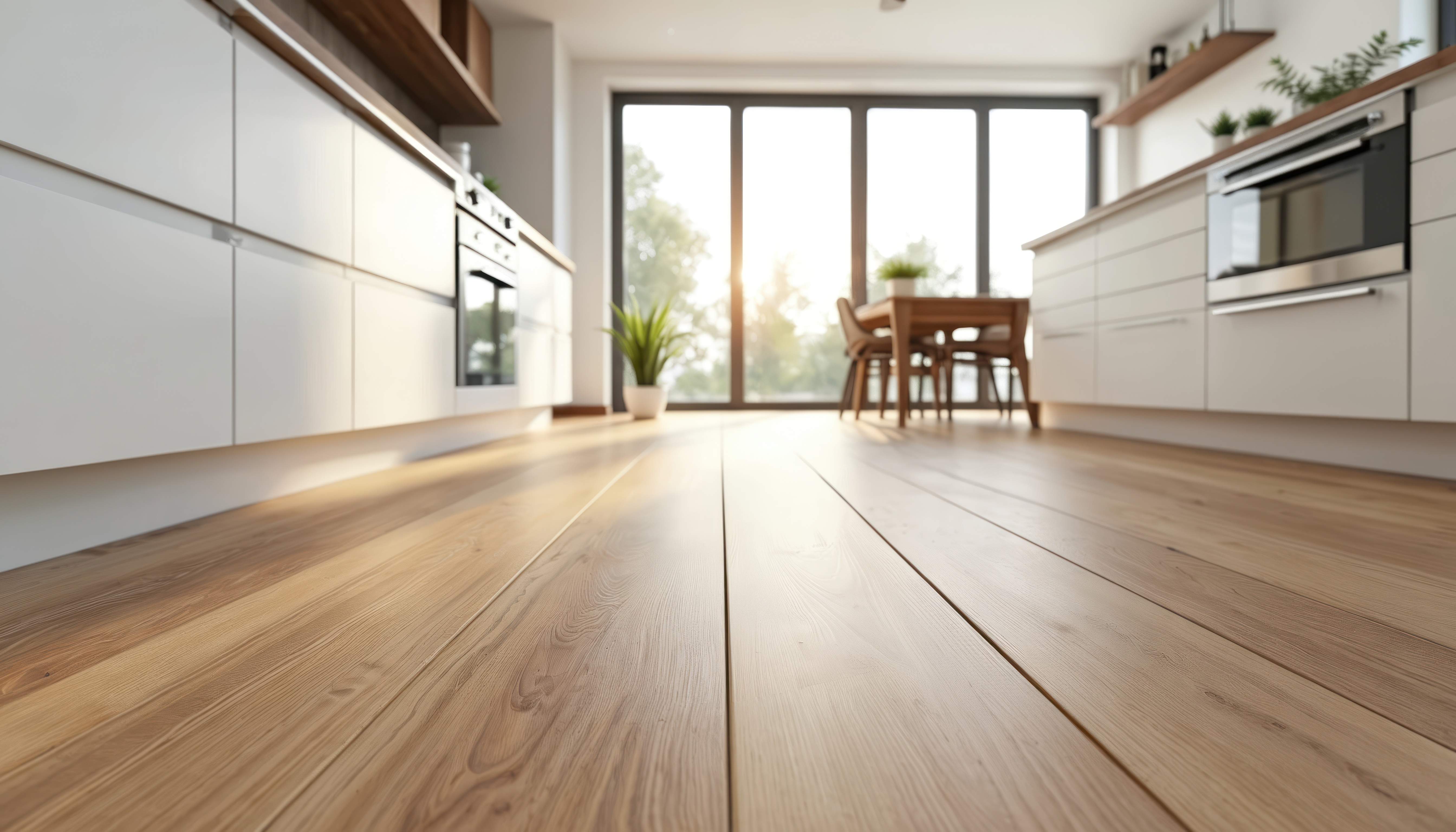
Standing in a bright, well-lit showroom makes choosing a new laminate floor feel simple. The wood grain looks rich, the color seems balanced, and the finish appears soft and inviting. However, once you bring that same sample board into your living room, kitchen, or hallway, the color can look completely different.
Light changes everything. The angle of the sun, the presence of shade trees outside, and even the direction your windows face dramatically alter how laminate planks look throughout the day. Taking a few extra steps to test your laminate samples under your home’s specific lighting conditions ensures you select a floor you will love for years to come.
Understanding How Directional Light Affects Color
The direction your room faces plays the single biggest role in how light interacts with laminate flooring.
North-Facing Rooms: These spaces receive cool, slightly bluish light throughout the day. Cool gray and dark walnut tones can end up looking colder or darker than intended. Warm oak and honey tones often balance out north-facing light, keeping the space cozy.
South-Facing Rooms: Bathed in warm, intense light from morning to late afternoon, south-facing rooms bring out golden and reddish undertones. Planks that already have strong yellow or red highlights can look overly vibrant here, whereas soft grays and muted beige tones hold up exceptionally well.
East-Facing Rooms: Bright, warm sunlight streams in during early morning hours, followed by cooler shadows in the afternoon.
West-Facing Rooms: These rooms start the day with softer shadow tones and finish with long, warm, golden sunlight in the late afternoon.
To get an accurate sense of how a laminate sample will look, leave it in the room for a full 24 hours and examine it during morning, midday, and dusk.
Testing Samples Against Vertical and Horizontal Surfaces
It is tempting to look at a flooring sample by holding it up at eye level or setting it upright on a table. However, floors are always viewed horizontally and from a distance.
Place your laminate sample directly flat on the existing floor where it will eventually be installed. Shadows cast by furniture, baseboards, and doorways change how dark or light the plank appears. Move the sample close to baseboards, near large windows, and under hanging light fixtures to see how the surface responds.
Evaluating Sheen, Texture, and Surface Reflection
Laminate comes in several finishes, ranging from ultra-matte and hand-scraped textures to high-gloss smooth surfaces. The level of natural light entering your home directly impacts how these finishes perform visually.
Direct sunlight hitting a high-gloss or semi-gloss laminate plank can create strong glare, highlighting dust, pet hair, or subtle surface imperfections. On the other hand, embossed or hand-scraped textures soften direct sunlight by scattering reflections across the wood grain pattern. If your room has floor-to-ceiling windows, low-sheen or matte textured laminate often yields a much smoother, more natural appearance under bright sun.
Pairing Samples with Wall Colors and Fabrics
Flooring never exists in a vacuum. The color of your walls, cabinetry, and furniture reflects light back down onto your floor sample.
Place your laminate sample against white trim, warm wood cabinets, and upholstered furniture. Notice if the wood grain clashes with your cabinetry or if the plank’s undertones clash with your wall paint. A sample that looks great on its own might look washed out or overly dark next to dark sofa legs or rich cabinetry.
Taking time to test laminate samples under varying light conditions protects your investment and ensures a flawless match for your interior design.


