

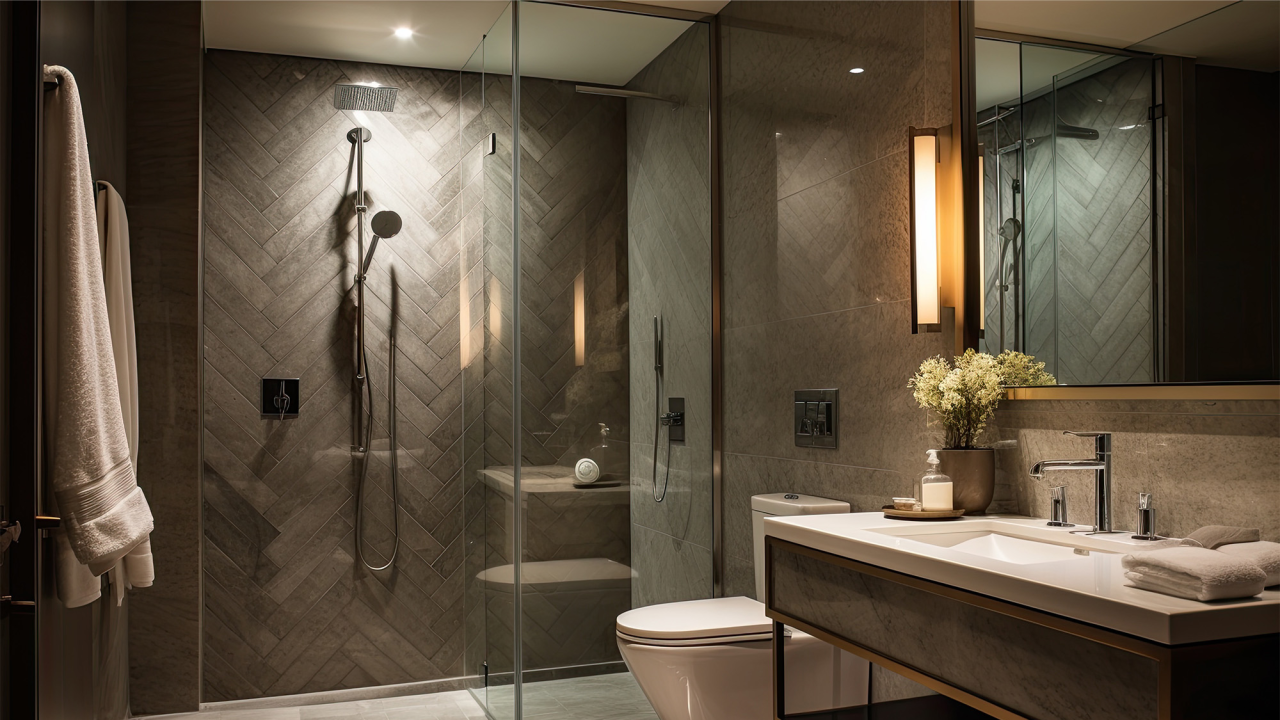
A spa-inspired bathroom does not have to feel formal or extravagant. The most successful designs are comfortable, uncluttered, and easy to use. With the right tile, lighting, storage, and layout, a Conway bathroom can feel calm while still serving the practical needs of a South Carolina household.
Tile is especially well suited to this style because it can be used on floors, shower walls, tub surrounds, backsplashes, and accent areas. Ceramic, porcelain, glass, and natural stone looks offer countless ways to create texture and depth without filling the room with unnecessary decoration.
Begin With a Calm, Cohesive Palette
A spa-inspired room should feel connected from one surface to the next. Start with two or three main colors rather than selecting each material independently.
Warm white, sand, soft gray, pale taupe, muted green, and natural stone tones can create a relaxed foundation. Wood-look vanities or shelves add warmth and prevent a neutral bathroom from feeling cold.
Large expanses of bold pattern can overwhelm a small room. If you enjoy decorative tile, use it intentionally in a shower niche, vanity backsplash, or narrow accent section. Keeping the remaining surfaces quieter allows the feature tile to stand out.
Select Tile According to Its Location
A beautiful wall tile is not necessarily suitable for the bathroom floor. Before purchasing, confirm whether the product is approved for floors, walls, showers, or other wet locations.
Bathroom floor tile should offer appropriate slip resistance for the intended environment. The shower floor often benefits from smaller tiles because additional grout lines can provide more traction and make it easier to follow the slope toward the drain.
Porcelain and ceramic tile are commonly considered for moisture-prone areas because properly selected products can provide dependable performance. Tile is widely used in bathrooms, kitchens, laundry rooms, and other spaces exposed to humidity or splashes.
Natural stone can create an elegant appearance, but some types require sealing or specialized maintenance. Before choosing a material based only on a showroom sample, compare its care requirements, stain sensitivity, slip characteristics, and approved applications.
Use Tile Size to Shape the Room
Large-format tiles can make a bathroom appear more open by reducing the number of visible grout lines. They work especially well on main floors and broad shower walls, provided the surface is prepared properly.
Smaller mosaic tile is useful on shower floors, curved areas, niches, and decorative features. It should be used with a clear plan, as an excessive number of grout joints may increase cleaning requirements.
A popular approach is to combine:
Large stone-look tile on the bathroom floor
Coordinating tile on the shower walls
Small mosaic tile on the shower floor
A restrained feature tile inside the niche
A simple backsplash behind the vanity
This arrangement creates visual interest while preserving the quiet, balanced character associated with a spa.
Make the Shower the Main Design Feature
In many bathroom remodels, the shower occupies the largest visual area. Extending tile higher on the wall can create a more finished appearance and draw the eye upward.
A recessed niche provides storage without adding a bulky shower caddy. When possible, align the niche with surrounding grout lines so it feels integrated into the design. A bench can add comfort, but its size, slope, waterproofing, and placement should be carefully planned.
The tile itself is only the visible surface. A successful shower also depends on the waterproofing system, drainage, substrate preparation, movement joints, sealants, and installation methods behind it. This is one reason professional bathroom remodeling and tile installation can be valuable.
Flooring Plus offers bathroom remodeling in addition to tile and other flooring products, helping Conway-area homeowners coordinate materials and installation through one local resource.
Choose Grout Color With Maintenance in Mind
Grout has a major influence on the final look. A matching grout color makes the tile pattern feel softer and more continuous. A contrasting color emphasizes the shape and layout of each tile.
Bright white grout can create a crisp appearance, particularly with white subway tile, but it may show discoloration sooner in active areas. Light gray, warm gray, beige, and other mid-tone colors can create a softer effect while being more forgiving.
Ask whether the selected grout requires sealing and which cleaning products are recommended. Product-specific care matters because aggressive cleaners can damage grout, tile finishes, stone, or nearby fixtures.
Layer the Lighting
Even a beautifully tiled bathroom can feel flat under a single overhead light. A spa-inspired room benefits from layered illumination.
Consider combining:
General ceiling lighting
Vanity lighting positioned for even facial illumination
Recessed or wet-location-rated shower lighting
Accent lighting beneath a floating vanity or inside shelving
Natural light with suitable privacy control
Choose light temperatures that complement the tile. Warm lighting can soften beige and wood tones, while neutral lighting generally works well with gray and white surfaces.
Add Comfort Through Practical Details
A spa atmosphere comes from how the room functions as much as how it looks. Heated flooring may add comfort beneath tile, provided the system is compatible with the flooring assembly. A handheld shower fixture, built-in seating, accessible storage, and properly placed towel hooks can also make daily routines easier.
Good ventilation is essential in a humid climate. An appropriately sized exhaust fan helps remove moisture generated during showers and can reduce lingering dampness. It should be vented correctly and used long enough to clear excess humidity.
Flooring Plus allows customers to browse products, use room-visualization tools for featured floors, request samples, and arrange an in-home estimate. Bringing tile samples into the actual room is useful because daylight, artificial lighting, cabinetry, and paint can change how a color appears.
A spa-inspired Conway bathroom should feel peaceful without sacrificing durability or maintenance. By selecting tile according to its intended use, coordinating the palette, and planning the shower as a complete system, homeowners can create a welcoming retreat that works every day.
Ready to plan a spa-inspired tile bathroom for your Conway home?


